
Rachel Payne addressed the Liberal’s ‘Safer Protest’ bill, and spoke on the Safer Protest with a Registration System and a Ban on Face Coverings Bill 2025. Rachel asserted that this bill provides no guidance on addressing the risks of violent protests by hate-groups, instead offering greater move-on powers to police: “This bill does not provide guidance on how we might respond to groups like the fascists, merely on the means to stop any protest.”
Wednesday the 29th of October 2025
Victorian Legislative Council
Rachel Payne (South-Eastern Metropolitan):
I rise to make a contribution on the bill before the chamber. The Safer Protest with a Registration System and a Ban on Face Coverings Bill 2025 is, according to Mr Davis, about balance and protecting the right to peaceful protest as a cornerstone of our democracy. It all sounds pretty reasonable. As Mr Davis noted in his second-reading speech, it is about drawing a clear line between the right to protest peacefully and the right of every Victorian to live free from intimidation, disruption and violence.
Australians’ right to protest
In Australia the right to protest and assemble is protected under international law and is an integral part of our functioning democracy. This right comes from the implied freedom of political communication found in our constitution. Mr Davis mentioned that 500 protests have occurred in Melbourne since October 2023, so I am assuming he is specifically targeting the pro-Palestinian rallies.
I would suggest many people have attended these rallies, me included, because they want to see an end to what both the UN and the International Criminal Court have denounced as an ongoing genocide in Gaza. And I would say, not unreasonably, they want to see the Victorian government sever ties with the weapons manufacturers who are enabling that genocide.
Separating democracy from authoritarianism
No doubt the recent protests have been disruptive, but sometimes democracy is disruptive and messy and inconvenient. It is what separates democracy from authoritarianism. I was not around in Parliament to see how those opposite responded to the anti-government, anti-lockdown, anti-vaccination protests that took place in Melbourne a few years back, but I do wonder if they spoke as passionately about the right of Victorians to live free from intimidation, disruption and violence during the protests of that era.
Regardless, this bill and some of the recent laws introduced by the government are quite chilling and put me in mind of how government abjectly failed to respond to the rise of fascism in Britain. It is quite a fascinating example.
As we know, fascism started to take root in Europe in between the two world wars, but one would not have thought Britain was a natural home of fascism. Britain did not lose the war, for starters, and the impacts of the Great Depression were not as severe as in other parts of the world and Europe in particular. But nonetheless, a small group of fascists were able to tap into the genuine concerns of working people, sow fear and propagate images of chaos and destruction.
What does that have to do with the bill before us today? Well, we have seen neo-Nazis doing the same thing here on the steps of Parliament. We have heard Thomas Sewell on the steps of Parliament, addressing his fellow protesters and promising that his men would fight for our survival against the ginormous empires of the Third World.
No guidance on addressing fascism
If the bill’s aim is to free us from intimidation, disruption and violence, and we take the recent anti-immigration protests as an example, how would providing for an authorisation and prohibition of certain public protests work? Would it permit everyone bar the Nazis to protest in that case?
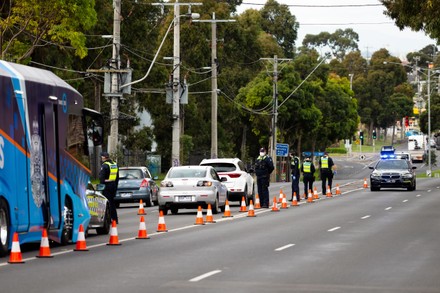
This bill does not provide guidance on how we might respond to groups like the fascists, merely on the means to stop any protest. This bill empowers police to move on protesters, but police already have sufficient move-on powers under the Summary Offences Act 1966, so why do they need further powers?
The provision enabling a court to exclude a protester from certain places is similarly redundant. Our position on the introduction of a permit system has been informed by the comments of police commissioner Mike Bush. On 28 July, he was asked in an ABC interview about introducing a permit system, which exists in other jurisdictions like New South Wales. He said:
“We’ve had a look to see if it will be effective, where we’ve landed is that it’s not worth bringing in …“
There may be a valid argument that the commissioner is not the lawmaker and that responsibility is vested here in Parliament. But I believe that to simply ignore that expert assessment is reckless.
Face coverings
As for prohibiting protesters from wearing face coverings, it is not a crime to wear a face covering in public. The proposed change in this bill would hand Victoria Police extraordinary powers to arrest peaceful protesters where there is no danger to the public.
People wearing face coverings wear them for a variety of reasons. The banning of face coverings at protests will prevent people with a disability, elderly people and people with health conditions from participating in their democratic right to protest. It will have a similar chilling effect on people who want to protect their anonymity and privacy.
Who are we to say that someone that has been the subject of gender-based violence, stalking, doxing or retaliatory violence does not have the right to protect themselves or their families by preserving their anonymity while exercising their democratic right to protest?
And of course, there are people who wear face coverings for religious or cultural reasons. How are we protecting these people from intimidation, disruption and violence? Are people not allowed to protect themselves from the unlawful and indiscriminate use of OC spray and tear gas by police, which we have seen a bit of lately, all from racial profiling, which we have also seen take place in this state.
It is already a crime in Victoria to wear a disguise with unlawful intent, and police have powers to remove face coverings if a crime is reasonably suspected. So why do we need to give them more power? Are these new laws only there to protect certain Victorians from intimidation, disruption and violence?
Police “move on” powers already sufficient
This bill before us is not the strong, fair and necessary reform that is argued by the opposition. It is yet another attempt to weaken our democratic right to protest and to restrict people’s civil liberties.
It hands more power to the police, enabling them to criminalise ordinary people for protesting. We are aware that the government is in the process of formulating its own protest bill. It is my sincere hope that they have done the necessary work of consultation and engagement with the community and have developed specific measures that uphold our rights and liberties, rather than impose these sorts of lazy blanket bans.
Also, it is worth noting that, at the end of the day, extremists love these restrictive laws. This enables them to paint themselves as martyrs while drawing ever more attention to their cause and allowing them to recruit more easily. The laws we have in place already afford police the tools they need to deal with violent and intimidatory individuals on our streets. We do not need any more.
The Legalise Cannabis Party is a party built on peaceful protest, and we will not be supporting this bill.